Urban System Solutions

VN

EN

DE

Hand Point Right

Angle Right

5˚C

UHI

SEA

Manifesto


The modern city is the greatest thermal machine ever built by human hands. Its concrete, steel, and asphalt absorb and store solar energy at a massive scale. In the rapidly densifying cities of the Global South, structures act as massive surface radiators rather than thermal barriers, baking our urban centers into uninhabitable microclimates. 

Therefore we are caught in a deadlock: we spend millions of megawatts to mechanically freeze interiors, while air conditioners pump immense residual heat back onto the streets. The city's natural capacity to breathe and ventilate has been completely engineered away. The air not capable to absorb and regulate that additional heat impact. 


The goal is to transform the dead, resource-consuming mass of the built environment into a living, distributive urban ecosystem. We believe every building, every roof, and every facade must become an active participant in the city's microclimate. By replacing heavy, inefficient traditional brickwork with precision materials like AAC and weaponizing the cooling power of vegetation irrigated by decentralized, closed-loop water recycling, we create a new logic of construction. We let nature do the work that air conditioning cannot sustain - cooling the city from the outside in.


With surface temperatures on conventional tropical rooftops regularly exceeding 60 degrees Celsius, waiting for new building codes is a luxury we don't have. What is already built must be diagnosed, understood, and transformed right now. This is where high-rise structures are reimagined not as static blocks, but as metabolic organisms - as carbon sinks, water circulators, and the "Mother Trees" of the tropical concrete jungle.


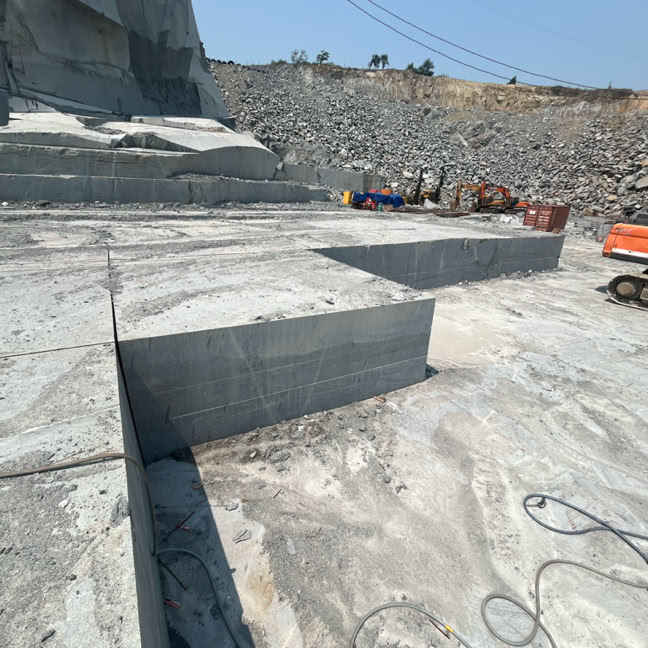
This work is backed by 25 years of hands-on practice and observation. It spans from the rigorous precision of a stonemason’s chisel to advanced scientific research on high-rise thermodynamics in Vietnam. 


The system architectures aren't conceptual dreams; they are grounded in empirical data, engineered for circular economy, and proven resilient through real-world typhoons. Securing a livable, cool, and resilient urban environment for urban residents is the defining challenge for the future of the Global South.

Vision


It’s all about human, buildings and climate adaption. 

Thermal imaging, advanced vegetation systems, and material ecology are the heart of GOASIS - because what you cannot measure, you cannot transform. Our cities must become resilient. More than ever.


From analyzing raw facade temperatures exceeding 50°C to deploying targeted vertical shading that achieves an immediate 11°C cooling differential, every single intervention we design begins with evidence.


We operate on a self-sustaining innovation model: The revenue generated from our specialized consulting, R&D partnerships, and scalable system solutions is directly reinvested into continuous field research and prototype development. Driven by deep conviction and relentless self-initiative, we constantly advance the integration of smart building envelopes, high-density vegetation systems, and closed-loop water circularity.


The ultimate aim of GOASIS is to engineer scalable urban system architectures and solutions tailored directly to the high-density neighborhoods, complex high-rises, and expanding megacities of the Global South.


True resilience does not rely on heavy, imported machinery. It requires localized execution: local materials, native plants, regional knowledge, and low-barrier, high-performance technology engineered to be replicated anywhere the heat demands it.


Mission


GOASIS develops advanced, climate-resilient system solutions for dense urban environments in Southeast Asia (SEA), with an active headquarters and testing ground in Vietnam. We operate across three performance domains:


Diagnose. We use thermographic imaging to monitor the urban fabric and make the hidden thermal failures of existing building stock visible and measurable. What acts as a massive surface radiator must be thermodynamically understood before it can be transformed.


Transform. We intervene at the strategic early stages of design development to pivot conventional architecture into high-performance, vegetated ecosystems. Through regenerative material choices like precision AAC, optimized building envelopes, and containerized Miyawaki-afforestation, we replace dead weight with thermodynamic performance. We turn baking concrete shells into self-regulating carbon and thermal sinks.


Circulate. In technical cooperation with WILO Germany, we implement decentralized, closed-loop water infrastructure at the building scale. By capturing and treating greywater directly on-site via specialized membrane filtration (MBR), we weaponize every single drop to automate the irrigation of vertical and horizontal vegetation. No waste, no infrastructure overload—every drop stays in the loop.


Our approach is rooted in the conviction that resilience is not an optional feature to discuss—it is the baseline foundation. Architecture must be engineered to withstand category-defining typhoons, absorb carbon, actively cool its immediate neighborhood, and serves the long-term well-being of the people within.


Facts I

Cityscapes & Surfaces


The thermal images shown to the right and below, captured across the dense urban fabrics of Hanoi, Ho Chi Minh City, and Da Nang, reveal a harsh reality: average surface temperatures regularly skyrocket past 65°C. This massive, stagnant "thermal cushion" traps our neighborhoods between street level and an altitude of roughly 30 meters. The chief culprits driving this extreme environmental loading are corrugated metal roofs and uninsulated, dark horizontal surfaces.


It should be noted: 

Throughout the Global South and specifically within the equatorial belt between latitudes 30° North and 20° South corrugated metal sheeting in shades of red, green, gray, and blue dominates provisional roofing and urban borders. In these highly saturated colors, the material acts as a massive solar sponge, absorbing extreme levels of radiation and re-radiating it directly back into the canopy, acting as primary emitters for the Urban Heat Island (UHI) effect. 


Blue, in particular, is often interpreted as a cool color in the cultural context of Feng Shui and is applied as a surface color on kindergartens, schools, and factories. Thermodynamics, however, proves the exact opposite: Blue surfaces absorb massive amounts of solar radiation, triggering peak surface temperatures. What is culturally perceived as cooling is, in the context of building physics, a severe thermal driver. Arrow Right Long


A similar phenomenon dictates the behavior of dark roof terraces and asphalt infrastructure. Due to their orientation, these horizontal surfaces endure the longest duration of solar exposure throughout the day. They act as massive thermal batteries, storing energy only to release it continuously during the night. However, because the nighttime ambient air is already thermally saturated, this energy remains trapped within the urban canopy.


To make matters worse, artificial turf has become the go-to material for modern playgrounds, balconies, and rooftops. Manufactured from green and black synthetic polymers, this artificial ground cover heats up exponentially, offering zero transpirational cooling while heavily contributing to localized microclimatic heat stress and environmental degradation.


Ultimately, attention must be drawn to another major heat emitter in cities, one that plays a significant role as anthropogenic waste heat in urban overheating: air conditioning.
AC units are standard equipment in every building. Operating without them seems inconceivable — its utilization as thoughtless and ubiquitous as flipping a light switch. Yet here, too, the same principle applies: the residual heat discharged by AC units can barely be absorbed by the surrounding air.


All of this combined leads to thermal congestion — the urban heat islands described above. In addition with extreme building densities, a distinct lack of convective ventilation corridors, and a severe deficit in urban green infrastructure, our cities lose their natural capacity to breathe in general. Without immediate thermal intervention, widespread urban exodus will become the inevitable next step for millions of residents.

Yellow - artificial turf in garden

RED - artificial turf in playground

07/08/2024 - 12:30

AC facade - 07/08/2024 - 16:45

Facts II

Building Envelope 


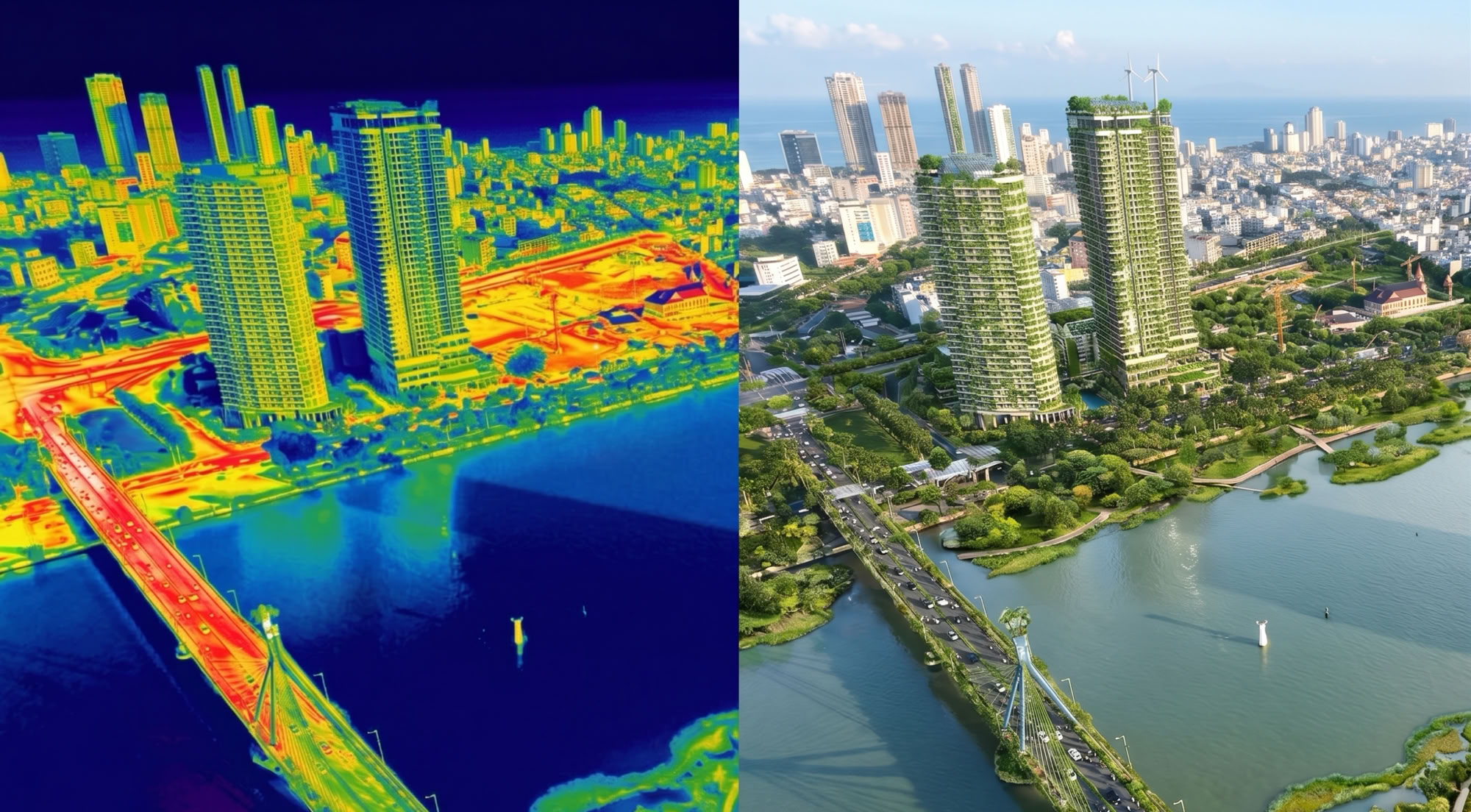
The illustrations on the right demonstrate the current paradigm of high-rises and building typologies in Vietnam and a projected future where thermal parameters are fully integrated, treating the building envelope as the primary protective shield for both the structure and its inhabitants.
The building envelope must be understood as the largest, most complex surface organism of a structure. It possesses the latent potential to do far more than just separate interiors from the elements or provide rain protection; it can deflect heat, provide structural shading, generate transpirational cooling, purify the air, and foster vertical biodiversity within the urban landscape. Only through this systemic synergy does the high-rise gain true urban quality, transforming from a climate liability into a vertical CO2 sink.

The ultimate goal is a radical shift away from vertical radiators toward living, vertical cooling fins— architectural equivalents to a high-performance CPU. By individually clustering and adapting this architectural system of vertical structures, we create new horizontal vegetative zones, elevated parks, and recreational spaces. Furthermore, these structural breaks allow wind corridors to penetrate the building mass, drastically improving convective ventilation for both the structure and its immediate neighborhood.


Elevating the building’s podium zone above street level yields multiple critical advantages:


01 | Structural Cost Reductions: Eliminating deep basement excavations and underground parking structures significantly lowers foundational costs and streamlines MEP/HVAC infrastructure.


02 | Climate Resilience: In Vietnam, climate change directly manifests as Sea Level Rise (SLR), groundwater depletion, soil salinization, and severe urban flooding events. Elevating the podium bypasses these vulnerabilities entirely, eliminating catastrophic consequential costs for equipment repair, maintenance, and vehicle damage.


03 | Psychological Comfort: For many residents, descending into dark underground parking lots remains a distinct psychological barrier—a human factor that is too frequently ignored in standard urban planning.


04 | Microclimatic Cooling: Elevating the base expands the usable surface area for vertical biophilic facades, actively injecting cooling into the surrounding microclimate.


05 | Optimized Maintenance: Technical equipment relocated to these elevated podium zones can be serviced at a fraction of the cost and with significantly reduced downtime.


06 | Thermodynamic Hydraulic Distribution: Modern pumping systems can distribute process water directly through the building starting from the shaded, naturally cooler spaces within the elevated podium.


07 | Active Roof Insulation: The resulting rooftop surfaces are freed to be utilized as intensive vegetative zones, acting as a massive, "thick" thermal insulator against solar radiation.


08 | Real Estate Asset Protection: Implementing these interventions directly secures the long-term value of the property. Without them, assets—especially those wrapped in conventional glass facades—face complete devaluation within the next five years due to skyrocketing operational costs or total structural inhabitability caused by overheating.


A critical, yet overlooked factor in localized thermal performance is the material composition and craftsmanship on-site. The traditional wall assembly in Vietnam relies on locally manufactured fired clay bricks, typically featuring two to six perorations. 

Masons lay these bricks utilizing site-mixed mortar consisting of sand, water, and cement. Due to the high dimensional inaccuracies of the bricks, they are laid using a thick-bed method with an average joint thickness of 20 to 25 mm. The result is an incredibly heavy, structurally inefficient wall system. To mask these surface unevenness and transitions to the concrete slabs, external plaster layers of 20 to 30 mm must be applied.

Compounding this, bricks are jammed diagonally at the interface with the concrete ceilings to avoid time-consuming cutting. It becomes evident that such a wall provides nothing more than basic weather protection; it possesses zero thermal capabilities or thermodynamic benefits. The factor of processing time, including curing time, is frequently not accounted for.


In contrast, Autoclaved Aerated Concrete (AAC) blocks are available in precision thicknesses of 100 and 200 mm. AAC is a dimensionally accurate, highly stable material with a century-long proven track record. It is installed using the thin-bed method with a maximum adhesive joint of just 3 mm, effectively reducing the thermal bridge of the joint to a minimum. 

The advantages of this wall system are undeniable: Massive weight reduction of the entire wall system. Superior thermal insulation and enhanced acoustic performance. Accelerated construction velocity (e.g., 1 sqm of a 200 mm wall requires a mere 30 minutes to assemble, including curing). 

This assembly is a dry-construction method; the adhesive mixture arrives on-site as pre-mixed dry goods. Requiring significantly less water than conventional masonry, it drastically reduces moisture injection and construction debris. AAC blocks are easily cut to precision, allowing them to flush perfectly against concrete slabs, ensuring the best possible thermal seal. Transitions are flawless, reducing the required plaster thickness to a mere 5 mm.


  • Conclusion:
    Average wall temperature above 32 degrees Celsius based on season. Without an adequate building envelope — whether single-skin or double-skin with an applied facade system (especially for high-rises) — no improvements can be achieved, and operational costs will rise massively. Given the projected regional temperature rise of up to 5 degrees Celsius, failing to transform the building skin will trigger drastic operational costs alongside the living discomfort and rapid, total devaluation of the real estate asset.


Brick Wall

AAC Wall

Wall 

Sections

Testing construction time

Up Right From Square

Facts III

Vegetation & Synergy 


Nature is the ultimate master of adaptation. Why not think of the building envelope as a living protective coat—a vertical and horizontal ecosystem designed to mitigate heat?

This approach transfers the reforestation method of Japanese botanist Akira Miyawaki—traditionally used for restoring degraded urban land—and adapts it for high-rise architecture. It utilizes a multi-layered, highly optimized substrate setup that supports accelerated plant growth.

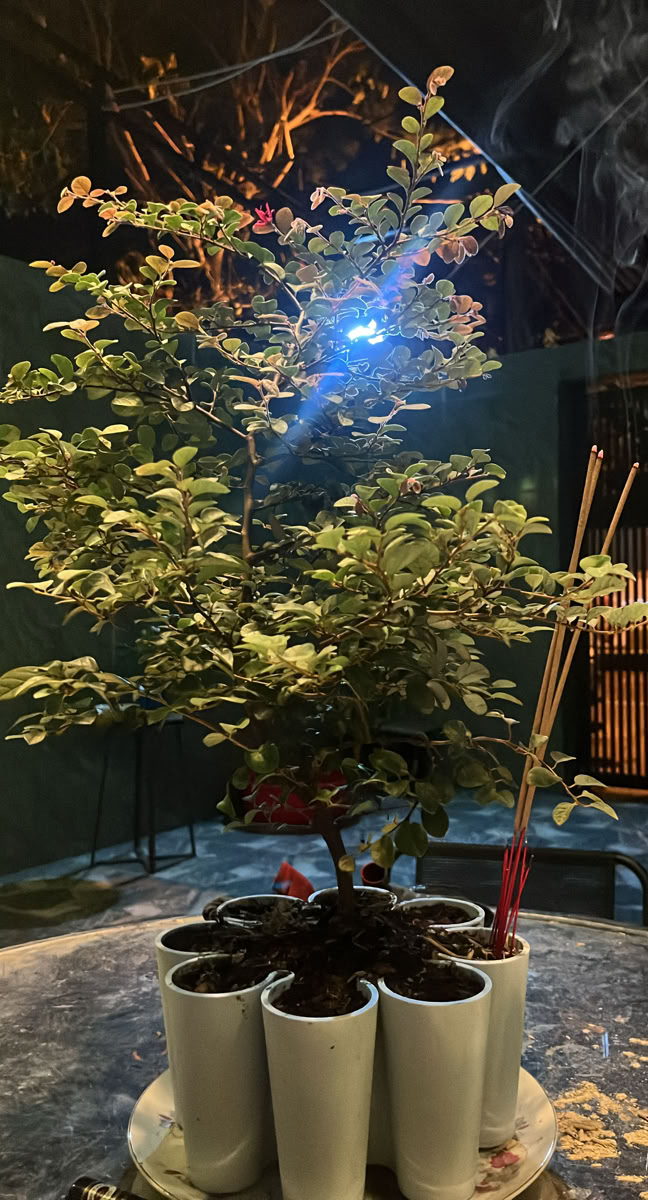
In our studies, we measured the local palm species (Cau Lua Vang) growing over one meter per year, rapidly developing a dense, protective canopy and root system. The Miyawaki method mixes diverse, native species to maximize ecological resilience and biodiversity. As the plants naturally compete and support each other, they form a dense forest structure. This deep, engineered soil package acts as a natural sponge against tropical torrential rain while creating a vital habitat for local wildlife.


Most importantly, the fast-growing canopy blocks direct solar radiation, creating important shading effects. The thermal illustrations on the right demonstrate the performance of this vegetative shield: measurements show up to a 50% temperature reduction on horizontal vegetative surfaces. Vertical vegetated facades could reach a delta of minus 12°C. This represents a significant shift in building thermodynamics.


For high-rise architecture, this system is highly practical when implemented as a second, integrated outer facade utilizing structural planter boxes, hanging greenery, and climbing plants that form a living mesh. By creating a distance of x = 800 mm (or more) from the exterior building wall, this zone functions as a walkable balcony. 

Thermodynamically, this space serves as a thermal buffer zone, a protective shield that insulates the primary exterior wall from extreme heat loads. Technically, this configuration allows for safe maintenance access and provides functional relaxation spaces for occupants. 

Furthermore, a key synergy effect occurs within the building systems: HVAC ventilation infrastructure can draw intake air directly from this shaded, plant-purified buffer zone. Because this air is naturally pre-cooled by the vegetation, the energy consumption of the cooling units is lowered. This creates a value-generating ecosystem loop that is entirely missing in conventional architecture.

Currently, standard glass-facade towers in Southeast Asia frequently operate like greenhouse ovens. Enclosing them in a living vegetative jacket allows the glass to regain its quality as a transparent feature, improving the interior experience and reducing the reliance on internal curtains or artificial blinds. 


Side Note:

Architecture has much to learn from nature’s micro-synergies. During our field research, we observed a notable bionic phenomenon between local palms (Cau Lua Vang) and ant colonies:

The palm actively absorbs rainwater, utilizing its stem as a passive cooling shaft. The ants, utilizing this thermodynamic advantage, build their nests precisely inside this cooled zone of the stem to protect their offspring from the tropical heat.

This represents an active, mutually beneficial ecosystem—and a direct example of how architecture can learn from biological structures to optimize the building envelope. 

Vertical clusters of High-Rise

ΔT = -27,9 °C
04/08/2024

ΔT = -20,7 °C
10/08/2024

ΔT = -30 °C
10/04/2026

Ant - Plant Symbiosis

WILO - Abionik MBR Water filter unit

Facts IV

Water & Circularity 


In Vietnam, per capita water consumption stands at approximately 130 liters per day, with an upward trend. Currently, urban green spaces are largely irrigated using municipal water or extracted groundwater. While hotels and resorts are legally required to treat their wastewater before discharge, high-rises and urban areas are not yet subject to the same strict mandates. This regulatory gap represents an immense optimization potential.


In light of the shifting climate parameters mentioned earlier - such as Sea Level Rise (SLR), groundwater depletion, and soil salinization - decentralized membrane filtration systems (MBR) offer a viable solution. By treating wastewater directly on-site, it can be purified to a standard that safely supplies toilet flushing inside the structure and irrigates vegetation on and around the building. This approach promotes a sustainable management of water resources, integrates directly into a circular economy, and ultimately reduces operational utility costs.


Measurements conducted with the double-chamber plant illustrated above demonstrate that up to 90% of the building's wastewater can be successfully treated. The resulting filtrate was utilized to irrigate the rooftop and facade vegetation twice daily for up to 3 minutes (varies from project to project). Furthermore, surplus water from this cycle was redirected for daily floor cleaning operations within the building.


High-rise developments containing 500 or more apartments routinely generate more wastewater than is required for their own internal irrigation loops. This surplus treated water could be directed into the public infrastructure to support nearby urban green spaces. Activating even fragmented spaces, such as dense intersections or high-occupancy zones, with vegetation helps cool the urbanity and establishes essential habitats for local fauna.


Facts V

Paradigm shift 


A shift in perspective inevitably occurs under extreme conditions.

A 5°C increase in thermal loading within our cities and megacities represents a critical stress factor—both for human living comfort, outdoor thermal comfort and for the building as a long-term real estate asset. 


Angle Right

Within this paradigm shift, conventional building typologies will transition away from fully glazed envelopes toward integrated, vegetative facades tailored to solar orientation. Greenery is strategically deployed on the exterior skin facing East, South, and West, while the North facade is partially covered depending on the specific orientation of the site and structure.


Vegetation can be implemented both on the outer skin of the building - acting as a high-performance double facade - and / or integrated directly within the building core as vertical vegetative shaft surrounding staircases, access routes, and elevator structural cores.


Elevating the structure above ground level creates a functional podium zone for parking, technical infrastructure, and retail spaces. This configuration not only allows for the integration of natural daylight but also facilitates continuous passive air circulation, particularly within the parking areas. Connecting this podium directly to the vertical vegetative shaft initiates the necessary thermal buoyancy (updraft), enabling the green core to function as an active, natural chimney that drives airflow throughout the entire building volume.


This internal vertical vegetation offers distinct thermodynamic enhancements. Beyond introducing filtered daylight into the deep building mass, it generates a vertical airflow driven by the natural stack effect (chimney effect), which actively cools the structural core.


Mechanical ventilation systems engineered to interface with these plant-purified internal zones draw cooler, fresher intake air. Consequently, they operate with significantly lower energy consumption compared to conventional HVAC infrastructure. The underlying engineering framework focuses on waste minimization, structural resource preservation, and the establishment of true circular economies at the building scale.


Example morphologies and concept solutions will be integrated here soon.

Solutions & Projects


Over the past 12 years in Vietnam, GOASIS has been intensively engaged in furniture design, interior design and fit-out contractor, architecture, urban master planning, higher education and scientific research into the impact factors of urban areas and high-rises, with a specific focus on vegetative variables. Our current focus centers on technical services for troubleshooting and engineering solutions for critical environmental, resilience  and structural situations.


As a locally based partner in Vietnam, GOASIS offers strategic collaboration in Research & Development (R&D). 

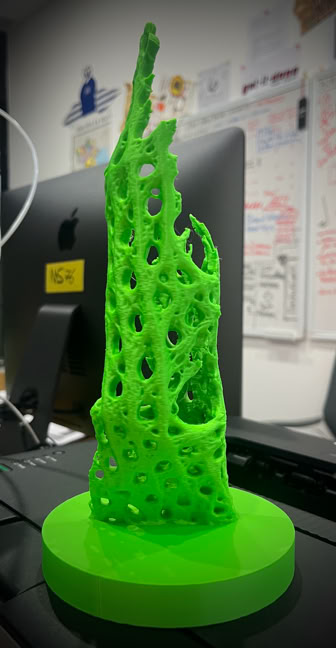
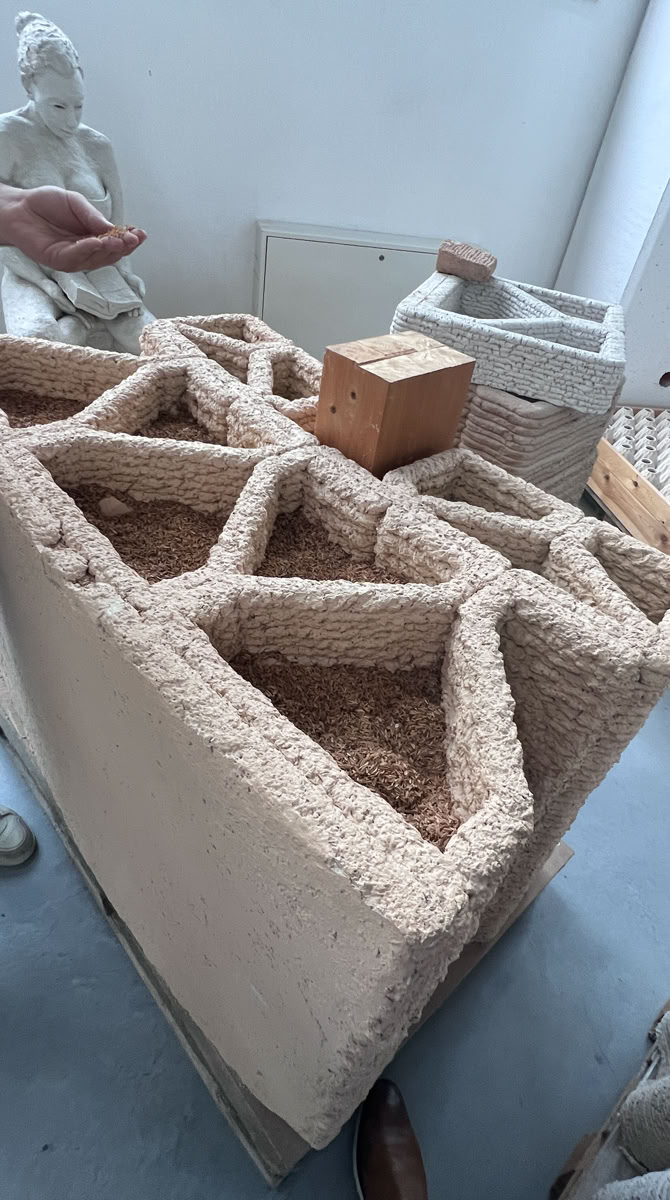
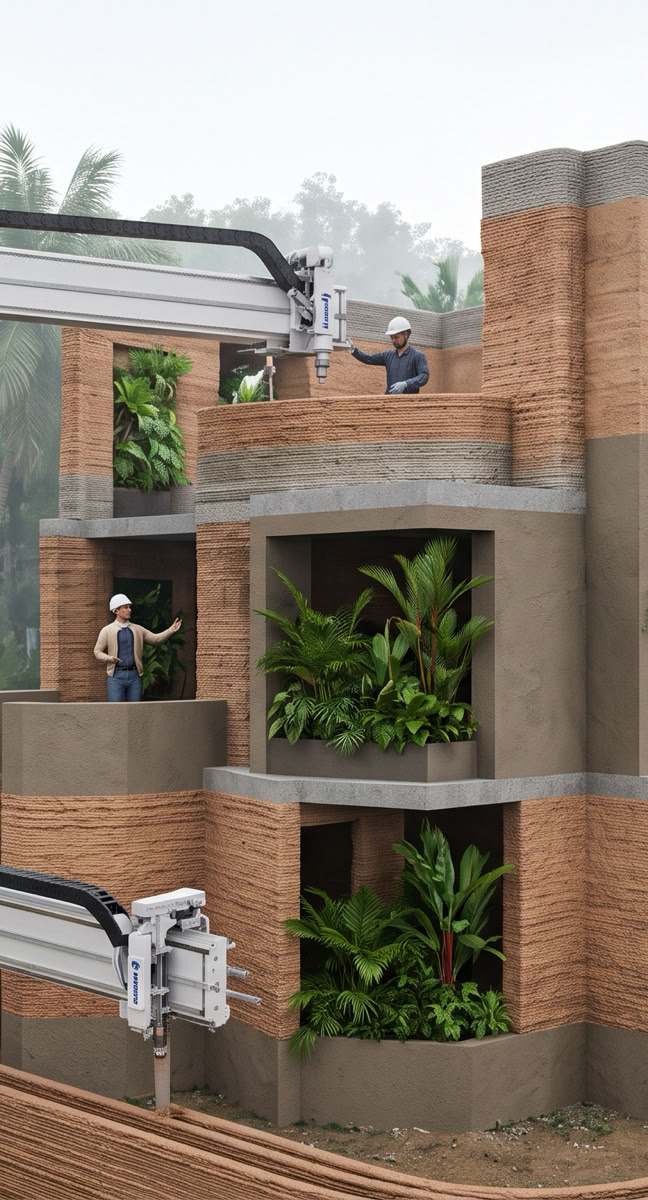
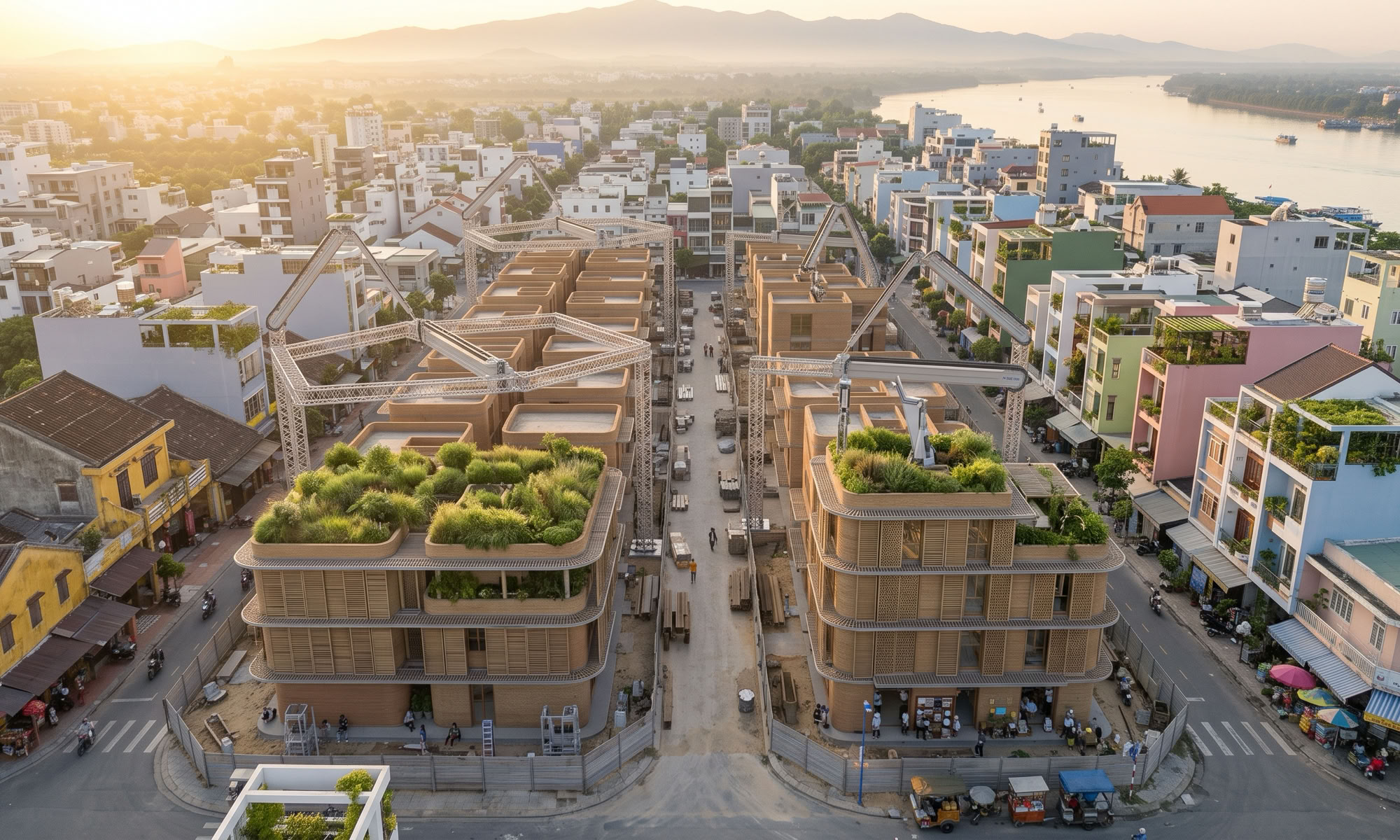
This includes green high-rise concepts, climate-resilient urban area development, social housing, and innovative building construction utilizing regenerative materials (e.g., rice husk, coconut fiber, clay) via 3D printing technologies. This technology offers a viable pathway for reducing construction costs and optimizing efficiency in rural and developing areas. Together we can.


We welcome your questions, project inquiries, and constructive professional exchange. 


E:    contact@goasis.earth

T:    +84 0 373 932 964 

SERVICES


• R&D Partner 

• Innovation Partner

• Technical Solutions

• Thermal Imaging

• Concept, Design, Engineering

• Regenerative Vision


Copyright © 2026 GOASIS. All images are the property of GOASIS. All rights reserved.

CONTACT

GOASIS (TCME ASIA Co. Ltd.)

Dr. Tobias Kuester-Campioni
Office B8, 3rd Fl, 35 Thai Phien Street,
Hai Chau Ward, Da Nang City, 

Vietnam


+84 373 932 964

contact@goasis.earth 

www.goasis.earth